7-Day Gorilla Photography Safari in Uganda: Habituation, a Second Family & Golden Monkeys

Built for people who travel with a camera. You get up to four hours with a semi-habituated gorilla family, a second trek to a fully habituated family the next day, golden monkeys in the bamboo of Mgahinga and dawn light on Lake Mutanda, all from one lodge facing the Virunga volcanoes.

  • Duration7 Days / 6 Nights
  • PricePrice on request
  • Highlight2 gorilla encounters
  • PermitsAll primate permits included

Trip Overview: Time Is the Best Lens You Can Buy

On a standard gorilla trek the ranger’s clock runs for 60 minutes. In practice, the first ten go on finding a clear line through the leaves and the last ten on wishing you’d changed settings sooner. The Gorilla Habituation Experience gives you up to four hours with one family. That is enough time to see the light change, wait for the silverback to come out of the shade, catch a mother nursing and a juvenile chest-beating, and leave a frame for later when the vegetation is too thick.

This itinerary pairs that habituation day with a standard trek to a different, fully habituated family. The two give very different pictures. The semi-habituated group gives you alert, wary, natural behaviour. The habituated family usually stays relaxed and close, and that’s when you get the intimate portraits. Two more days add golden monkeys in Mgahinga Gorilla National Park and landscape work on Lake Mutanda, a volcanic lake with forested islands and the cones of Muhavura, Mgahinga and Sabyinyo behind it.

The trip runs at your pace. You have a private vehicle and a driver-guide who knows to stop when the light is right, and there are no group schedules to keep.

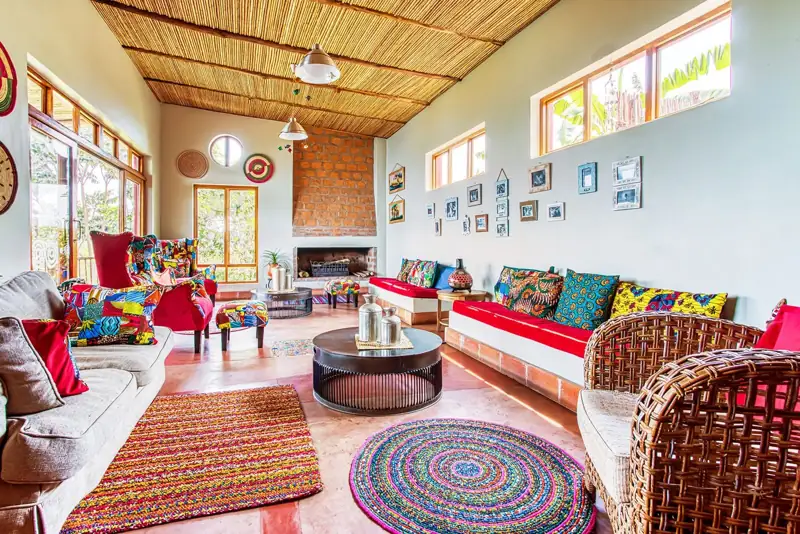
Main lounge at Chameleon Hill Lodge near Kisoro

Photography Safari at a Glance

Duration7 days, 6 nights (1 night Entebbe, 5 nights Lake Mutanda)
Start and finishEntebbe International Airport (EBB)
Primate encountersGorilla Habituation (up to 4 hrs), standard gorilla trek (1 hr), golden monkey tracking (1 hr)
Photography subjectsMountain gorillas, golden monkeys, Virunga volcanoes, Lake Mutanda, forest birds and macro
Group sizeMax 4 on habituation, max 8 on the standard trek; private vehicle throughout
Minimum age15 years for gorilla permits
AccommodationThe Boma (Entebbe), Chameleon Hill Lodge (Lake Mutanda)
TransportPrivate 4×4 safari vehicle with pop-up roof and charging points; Kisoro flight option
Best months for lightJune–August and December–February for clearer skies; the green season brings softer, more even forest light

Day-by-Day Itinerary

Day 1Arrive in Entebbe

You’re met at Entebbe International Airport and taken to The Boma, a small guesthouse ten minutes away. If you arrive in daylight, the Lake Victoria shoreline and the Entebbe Botanical Gardens are good places to warm up the long lens on fish eagles, hornbills and black-and-white colobus. In the evening your guide checks your kit list with you, including rain covers, batteries and cards, and confirms the permit dates.

Overnight: The Boma, Entebbe  ·  Meals: Dinner (if arriving before 8 pm)

Day 2Fly or Drive to Lake Mutanda

We recommend flying for this trip. The morning flight from Entebbe to Kisoro takes about 1.5 to 2 hours and saves the long drive. It also gives you aerial views over the crater lakes, and you arrive with an afternoon free for your first landscape session. Chameleon Hill Lodge is about 30 minutes from Kisoro airstrip, on a hillside above Lake Mutanda. On a clear evening the Virunga volcanoes turn pink behind the islands, a classic shot taken right from the lodge terrace. If you prefer to drive, allow 9 to 10 hours with good stops along the way, such as the equator, Ankole cattle and the Kigezi terraces.

Overnight: Chameleon Hill Lodge, Lake Mutanda (5 nights)  ·  Meals: Breakfast, lunch, dinner

Day 3Gorilla Habituation Experience, Rushaga

Leave the lodge at 6:15 am for the drive of about 1 hour 15 minutes to Rushaga park headquarters, then registration and briefing at 7:30. Your group of up to four sets off with the ranger, trackers and a habituation researcher. Pack light: one body, one lens you can work in tight spaces, spare batteries in an inner pocket where they stay warm, and a rain cover already fitted. The walk in is off-trail and can take one to five hours.

When you reach the family you have up to four hours, and that changes how you shoot. Use the first half hour to watch rather than shoot: see which animals are relaxed, where the light falls and where the silverback settles. Then work methodically. Do portraits when a face turns into a gap of light, environmental frames that show the tangled habitat, and behaviour sequences such as feeding, grooming and play. The family is still cautious, so you’ll see bluff charges and alert postures that fully habituated groups rarely show. These frames tell the story of habituation itself. Keep 7 metres away and never use flash.

Overnight: Chameleon Hill Lodge  ·  Meals: Breakfast, packed lunch, dinner

Day 4Second Gorilla Family on a Standard Trek

Back to Rushaga for a one-hour visit to a fully habituated family. Rushaga has more habituated groups than any other sector, including Nshongi, Busingye, Kahungye and Mishaya. A habituated family behaves very differently. Gorillas often feed and rest within a few metres of the group, and youngsters sometimes come closer than the rules allow, in which case the ranger will move you back. You’ll get cleaner portraits than on Day 3, often against a softer background, so this is the day for a short telephoto and a wide aperture. One hour goes quickly, so use what you learned on the habituation day and have your settings ready before you reach the family.

Overnight: Chameleon Hill Lodge  ·  Meals: Breakfast, packed lunch, dinner

Day 5Golden Monkey Tracking in Mgahinga

Drive about an hour to Mgahinga Gorilla National Park on the slopes of the Virunga volcanoes. Golden monkeys are endangered, found only in the Albertine Rift, and live in bamboo forest. They’re fast, bright orange and often feed low on bamboo shoots in the morning, which makes them a hard but rewarding subject. Use a fast shutter (1/500s or quicker) and continuous autofocus. The walk is gentle compared with Bwindi, usually 1 to 3 hours in total, with one hour of observation. In the afternoon you can photograph farm life and the volcano views on the way back to the lodge.

Overnight: Chameleon Hill Lodge  ·  Meals: Breakfast, lunch, dinner

Day 6Lake Mutanda Landscapes & Free Shooting Day

At first light a boatman takes you out by dugout or motorboat onto Lake Mutanda. Mist often lifts off the water after sunrise, and when the air is still the islands and volcanoes reflect perfectly. Later the day is yours. Options include a guided bird walk for papyrus and forest species, portraits of village life with a community guide who arranges consent and fair payment, or editing time on the lodge terrace before the golden hour. Your guide can also take you back to the Rushaga forest edge for macro work, where chameleons, fungi and butterflies are plentiful after rain.

Overnight: Chameleon Hill Lodge  ·  Meals: Breakfast, lunch, dinner

Day 7Fly Back to Entebbe

Transfer to Kisoro airstrip for the morning flight to Entebbe, landing around midday. That leaves time to connect with afternoon or evening international departures. If you drove in and want to drive out, plan on arriving at the airport in the early evening.

Meals: Breakfast
Gorilla Photography Tips for Bwindi

Bwindi is one of the hardest places in Africa to photograph. It’s dark, wet, crowded with leaves, and your subject is black. These are the settings and habits that work.

Camera Settings

Expect to shoot at ISO 1,600–6,400 under the canopy, so a body that handles high ISO cleanly is worth more than extra megapixels. Use apertures of f/2.8–f/4 and at least 1/250s for still animals, and 1/500s or faster for juveniles and golden monkeys. Expose for the face, and dial in −0.7 to −1 EV when the frame is mostly dark fur, or the camera will overexpose the background. Shoot RAW.

Lenses

A 70–200mm f/2.8 or 100–400mm covers most situations, because you will often be 7–10 metres away. A 24–70mm or 24–105mm handles the times gorillas move closer and environmental shots. Avoid changing lenses in the forest. Humidity and drizzle get onto the sensor quickly, so many photographers bring two bodies instead.

Protecting Your Gear

Use a fitted rain cover, a dry bag inside a small daypack, plenty of microfibre cloths and silica gel packs. Lodges have charging points, and our vehicles have inverters for charging on the road. Tripods and monopods are generally not practical on the trek; a monopod may be allowed if it doubles as a walking stick, but check with the ranger.

Ethics & Rules

Flash is banned. Keep at least 7 metres away and don’t push for a better angle by breaking the line. The ranger’s word is final. Drone flying is prohibited in Ugandan national parks without special permission. The best images come from patience: the four-hour habituation window exists so you can wait for the moment instead of forcing it.

Where You’ll Stay

Chameleon Hill Lodge, Lake Mutanda (5 nights)

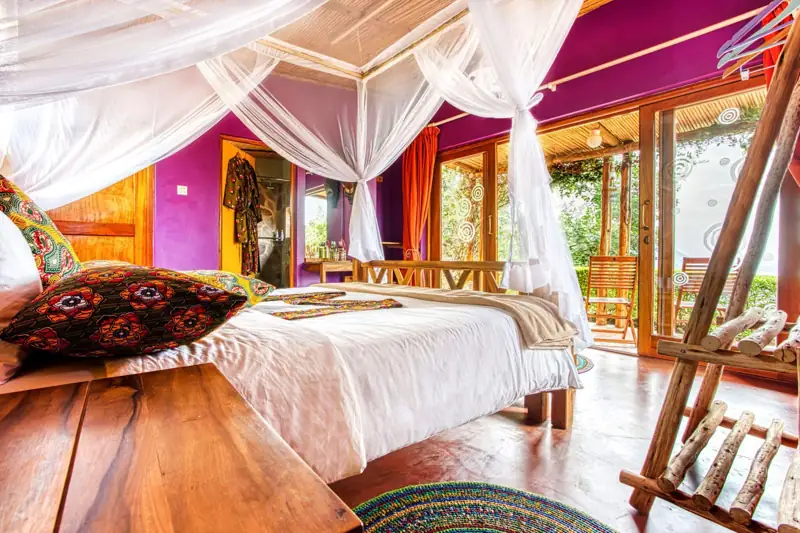
A brightly coloured lodge on a hill above Lake Mutanda, about 30 minutes from Kisoro airstrip and about 1 hour 15 minutes from Rushaga. It is the ideal base for this trip because it is the one location within easy reach of all three primate permits. Each chalet looks across the lake to the Virunga volcanoes, so sunrise and sunset shoots begin at your door. The lodge has a lounge with a fireplace for cold nights at altitude, home-cooked meals, and staff used to packing early breakfasts for 6 am departures.

Colourful chalet bedroom at Chameleon Hill Lodge, Lake Mutanda

The Boma, Entebbe (1 night)

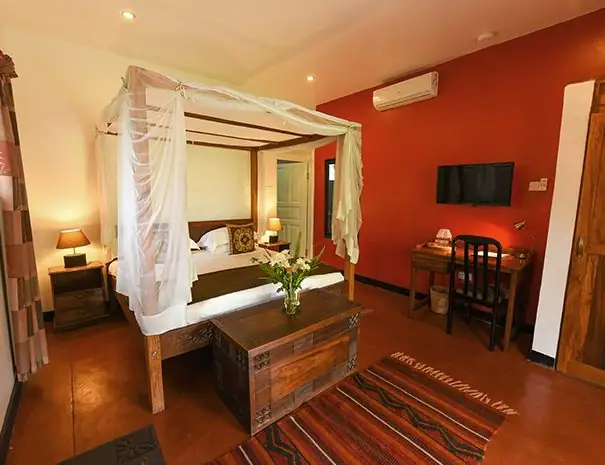
A quiet guesthouse in a garden 10 minutes from the airport, with cool rooms, mosquito-netted beds and plenty of birds outside the window for a first warm-up with the camera.

Standard room with mosquito-netted bed at The Boma, Entebbe

Would you rather sleep at the forest edge? We can base you at Four Gorillas Lodge in Rushaga instead, with a shorter drive to the gorillas and a longer one to Mgahinga.

What’s Included

Included

  • Gorilla Habituation Experience permit
  • Standard gorilla trekking permit (second family)
  • Golden monkey tracking permit, Mgahinga
  • Lake Mutanda boat trip
  • Private 4×4 vehicle with charging points, fuel and driver-guide
  • 6 nights’ accommodation (full board at Lake Mutanda)
  • Airport meet-and-greet, transfers and bottled water

Not included

  • International flights
  • Entebbe–Kisoro flights (recommended; quoted per person)
  • Uganda visa and travel insurance
  • Porter fees (about US$20 per trek)
  • Drinks, laundry and personal expenses
  • Tips for guides, rangers and lodge staff

See our gorilla trip cost guide for flights, visas and tips.

Is This Package Right for You?

A Good Fit If You…

  • Care about the images and want time to make them, not just record the moment
  • Want to compare a semi-habituated and a fully habituated family
  • Are fit enough for two demanding trek days in a row, with a gentler day to follow

Consider Another Package If You…

Gorilla Photography Safari FAQs

Is there a limit on cameras or photos on the gorilla trek?

There is no limit on the number of photos or cameras for still photography. Flash is forbidden at all times. Professional filming for commercial use needs a separate Uganda Wildlife Authority filming permit, and we can advise on it if you’re shooting for publication.

Why do the habituation and the standard trek on consecutive days?

Light, weather and the families’ locations change daily, so two consecutive days give you two different sets of conditions while what you learned on Day 3 is still fresh. If you’d prefer a recovery day in between, we can switch Days 4 and 5 so golden monkeys come in the middle.

Can I hire a porter to carry my camera bag?

Yes, and we recommend it. Porters carry your daypack and spare gear, which leaves you free to shoot and to use your hands on steep ground. Keep the camera you’re using on you, and pack the rest in a dry bag so the porter can carry it safely.

What’s the weight limit on the Kisoro flight?

Domestic flights usually allow about 15 kg per person in soft bags, including hand luggage. Photographers often buy an extra seat for gear or leave non-essential luggage in Entebbe, which we can arrange.

Which month is best for gorilla photography?

June to August and December to February have the driest trails and the most sunny breaks, which help with landscapes. Many photographers prefer the green season (March–May and October–November). The overcast light is more even under the canopy, the forest is lush, and permits are easier to secure.

Check Habituation Permits for Your Dates

Only eight habituation places open each day in Uganda. Send your dates and we will confirm availability and a quote.

+256 716 068 279Check Availability