6-Day Gorilla Habituation & Cultural Safari: The Community Trail

Four hours with a semi-habituated gorilla family in Rushaga, plus two days with the people who share the forest edge: a Batwa community, the farming villages around Rubuguri and a dugout canoe trip on Lake Mutanda below the Virunga volcanoes.

  • Duration6 Days / 5 Nights
  • PricePrice on request
  • Start & finishEntebbe to Entebbe
  • PermitsHabituation permit included

Trip Overview: The Gorillas and the People of Bwindi

Bwindi isn’t an empty wilderness. Its boundary is a hard line between ancient rainforest and some of the most densely farmed hills in Africa, where tea, bananas and sorghum grow right up to the park edge. The success of gorilla conservation here depends on those communities. Twenty percent of every park entry fee goes to local projects, and the trackers, porters and rangers on your trek mostly come from the surrounding villages.

This six-day itinerary puts both sides of that story into one trip. Day 3 is the Gorilla Habituation Experience: up to four hours with a gorilla family that is still getting used to people, in a group of no more than four visitors. Day 4 is with the Batwa, the forest people who lived inside Bwindi until it became a national park in 1991, and with the farming families of Rubuguri. Day 5 takes you to Lake Mutanda, where fishermen still paddle dugout canoes beneath Muhavura, Mgahinga and Sabyinyo volcanoes.

All the cultural activities are run by community groups and paid directly to them. You won’t be taken to a staged show; you’ll be with people working their own land and telling their own history.

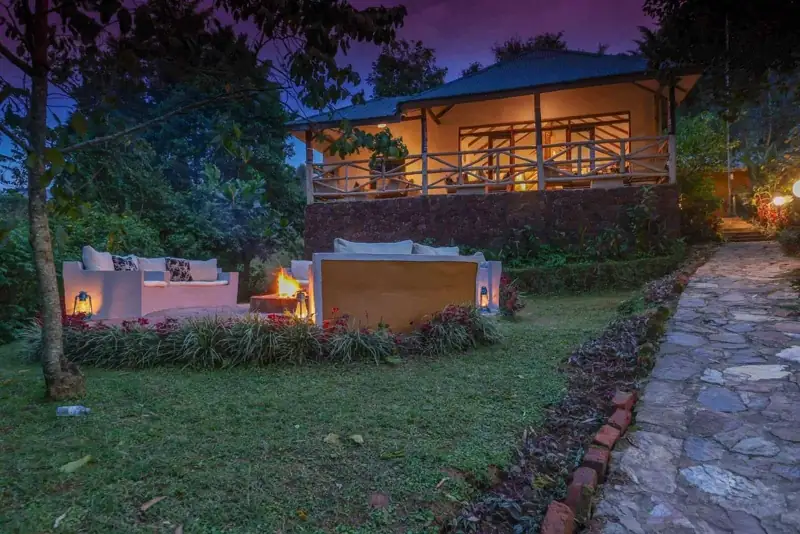
Main lodge and garden lit up in the evening at Gorilla Safari Lodge, Rushaga

Community Trail at a Glance

Duration6 days, 5 nights (1 night Entebbe, 4 nights Rushaga)
Start and finishEntebbe International Airport (EBB)
Gorilla activityGorilla Habituation Experience, Rushaga sector, Bwindi Impenetrable National Park
Cultural activitiesBatwa community visit, Rubuguri village walk, Lake Mutanda dugout canoe trip
Group size with gorillasMaximum 4 visitors
Minimum age15 for the habituation permit; younger family members can join the cultural days
Fitness levelStrenuous on Day 3, easy to moderate on the other days
AccommodationThe Boma (Entebbe), Gorilla Safari Lodge (Rushaga)
TransportPrivate 4×4 safari vehicle with driver-guide

Day-by-Day Itinerary

Day 1Arrive in Entebbe

Your driver-guide meets you at Entebbe International Airport and takes you 10 minutes into town to The Boma, a guesthouse in a converted colonial-era home with a garden full of birds. If you land early, consider a late-afternoon walk in the Entebbe Botanical Gardens on the Lake Victoria shore. Before dinner your guide goes through the plan for the week and checks your passport details against the permit.

Overnight: The Boma, Entebbe  ·  Meals: Dinner (if arriving before 8 pm)

Day 2Across Southern Uganda to Rushaga

A full travel day of 9 to 10 hours, and a good introduction to rural Uganda. The route crosses the equator at Kayabwe, passes roadside drum makers at Mpambire, goes through the Ankole cattle country around Mbarara and climbs into the terraced Kigezi highlands, which are sometimes called the Switzerland of Africa. Your guide will point out crops, markets and the changing farming styles as the altitude rises. The last section on murram road brings you to Rubuguri and the forest edge by late afternoon. Alternatively, fly from Entebbe to Kisoro airstrip in about 1.5 to 2 hours and drive 90 minutes from there.

Overnight: Gorilla Safari Lodge, Rushaga (4 nights)  ·  Meals: Breakfast, lunch, dinner

Day 3The Gorilla Habituation Experience

Report to Rushaga park headquarters at 7:30 am for registration and a ranger briefing, then set off with your group of four, the ranger guide, an armed escort, your porters and a member of the habituation team. The trackers left at first light from the family’s night nests and radio back their position. Once you’re off the trail, the way through the forest is cut by hand, so expect thick vegetation, steep ground and slow progress.

When you reach the family, your up-to-four-hour visit begins. You’ll see how habituation actually works: the team calls to the gorillas with soft grunts, waits out a young male’s nervous display, and logs feeding and movement data as the family settles. Keep at least 7 metres away and wear your mask. You can pause at any time if the slope gets too much. Most guests are back at the lodge between 3 and 5 pm with their habituation certificate. Over dinner your guide can explain how the trekking fees you just paid flow back to the villages you’ll visit tomorrow.

Overnight: Gorilla Safari Lodge, Rushaga  ·  Meals: Breakfast, packed lunch, dinner

Day 4Batwa Community Visit & Rubuguri Village Walk

The morning is spent with a Batwa community near Rushaga. The Batwa are thought to have lived in the forests of the Albertine Rift for thousands of years, as hunters, honey-gatherers and healers. When Bwindi was gazetted as a national park in 1991 they had to leave the forest, often with no land of their own. Community guides show how they built shelters, set traps, collected wild honey and used forest plants as medicine, and the visit ends with song and dance that they choose to share. Your visit fee goes directly to the community.

After lunch, a local guide leads a 2 to 3 hour walk through the farms and homesteads around Rubuguri. Typical stops include a traditional healer who explains plant remedies, a blacksmith working with a goatskin bellows, a family brewing banana beer and sorghum porridge, and a primary school (on weekdays during term). It is the most relaxed day of the trip and the one guests talk about longest after the gorillas.

Overnight: Gorilla Safari Lodge, Rushaga  ·  Meals: Breakfast, lunch, dinner

Day 5Lake Mutanda Dugout Canoe Trip

Drive about an hour to Lake Mutanda, a deep volcanic lake scattered with forested islands. On clear mornings the three Virunga volcanoes on the Uganda–Rwanda border are reflected in it. With a local boatman you paddle a dugout canoe (or a motorboat if you prefer) past fishing villages and around the islands, watching for otters, kingfishers and grey crowned cranes. Lunch is at a lakeside lodge. If you’d rather stay put, spend the day at the lodge instead: the forest-edge birding trail or a short walk to the Rushaga viewpoints are both easy to arrange.

Overnight: Gorilla Safari Lodge, Rushaga  ·  Meals: Breakfast, lunch, dinner

Day 6Return to Entebbe

After an early breakfast, drive back to Entebbe and arrive in the early evening, in time for late-night international departures. If you’d prefer to fly back, the Kisoro flight lands in Entebbe around midday. Services end at the airport.

Meals: Breakfast, lunch

Why Community Visits Matter for Gorilla Conservation

Revenue Sharing

Uganda Wildlife Authority shares part of park revenue with the parishes bordering Bwindi, and a US$10 levy on every gorilla permit goes to the neighbouring communities. That money has paid for classrooms, water tanks and health posts. People who benefit from the gorillas have much less reason to set snares or clear forest edges.

Jobs in the Forest

Porters, trackers, cooks and many rangers come from the villages along the park boundary. Hiring a porter for about US$20 is one of the most direct ways your visit supports a local household, and many porters belong to associations that reinvest a share of their fees in community projects.

Batwa Land and Livelihoods

Most Batwa families received no compensation when they had to leave the forest. Fees from cultural visits help pay for land, school fees and healthcare. Ask your guide about the history and listen; it isn’t just a performance.

Disease Prevention

Mountain gorillas share about 98% of their DNA with us and can catch human respiratory infections. Community health programmes around Bwindi lower the risk of disease passing from villages to gorillas, which is why the 7-metre rule and face masks on the trek matter so much. Read more in our mountain gorilla conservation guide.

Where You’ll Stay

Gorilla Safari Lodge, Rushaga (4 nights)

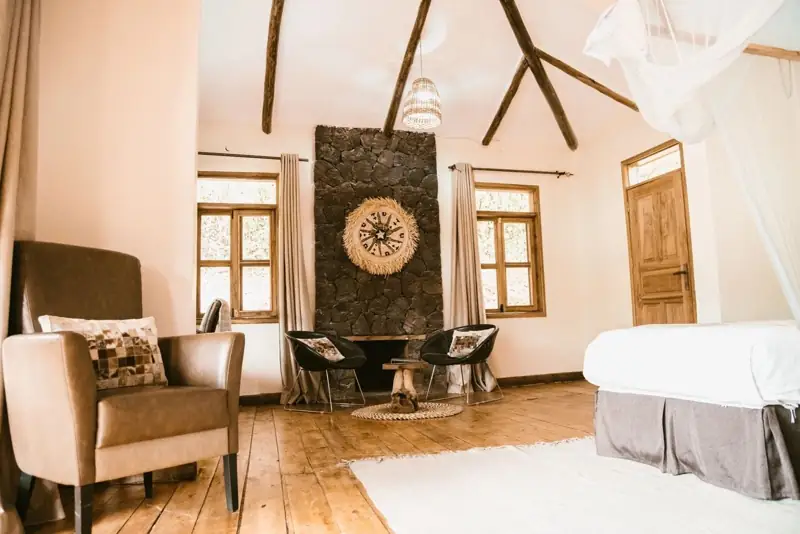
Gorilla Safari Lodge sits on a ridge at the edge of the forest, a few minutes’ drive from the Rushaga trailhead. That matters on habituation morning, and it gives you four calm nights for a trip that is all about the area itself. The cottages are spacious and set in a lush garden, with fireplaces for the cold Rushaga evenings, netted beds, and verandas where birds feed in the trees right in front of you. Meals are served by candlelight in a main lodge decorated with woven baskets from the area.

Cottage interior with fireplace and sitting area at Gorilla Safari Lodge

The Boma, Entebbe (1 night)

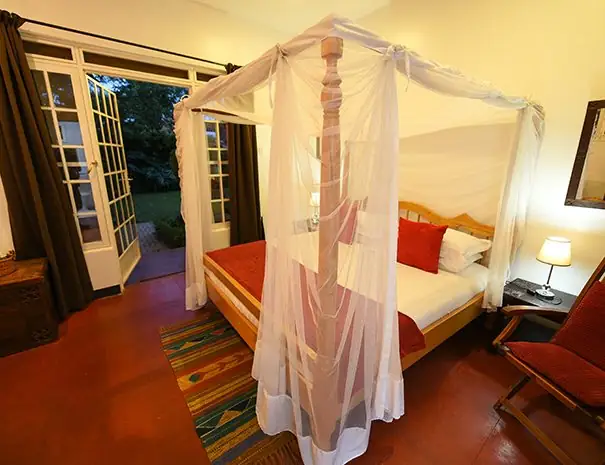
A small guesthouse in a converted colonial-era home, set in a tropical garden about 10 minutes from the airport. Rooms open onto shaded verandas, and the staff are used to welcoming guests from late-night flights with a light meal and a quiet room.

Double room opening onto the garden at The Boma, Entebbe

Other good Rushaga bases for this itinerary are Four Gorillas Lodge, Ichumbi Gorilla Lodge and Rushaga Gorilla Camp.

What’s Included

Included

  • Gorilla Habituation Experience permit (US$1,500 value)
  • Batwa community visit and Rubuguri village walk fees
  • Lake Mutanda canoe trip with local boatman, plus lakeside lunch
  • Private 4×4 safari vehicle, fuel and English-speaking driver-guide
  • 5 nights’ accommodation as listed (full board in Rushaga)
  • Airport meet-and-greet, transfers and bottled water
  • 24/7 in-country support

Not included

  • International flights and the optional Kisoro flight
  • Uganda visa (see our Uganda visa guide)
  • Travel insurance with medical evacuation cover
  • Porter fee (about US$20 per trek)
  • Crafts bought in the community, drinks and laundry
  • Tips for guides, rangers and lodge staff

See our gorilla trip cost guide for flights, visas and tips.

Is This Package Right for You?

A Good Fit If You…

  • Want to understand how conservation actually works on the ground, not just see the gorillas
  • Are travelling as a family with teenagers aged 15 and over, or with younger children who will skip the trek
  • Prefer one well-located base to changing lodges every night

Consider Another Package If You…

Community Trail FAQs

Can children join this trip?

Yes, but only travellers aged 15 or over can join the habituation trek; Uganda Wildlife Authority makes no exceptions. Younger children can stay at the lodge with a parent and a guide on Day 3, and then join the Batwa visit, village walk and canoe trip, which suit all ages.

Is the Batwa visit ethical?

We only work with visits that the Batwa community runs itself and where the fee goes directly to them. You won’t be asked to pay for photos or hand out sweets. The best thing you can bring is time and questions. If you’d like to give more, buying crafts at fair prices or contributing to a community school fund helps more than gifts.

Is this the same as the Batwa Trail in Mgahinga?

No. The Batwa Trail is a separate, longer walk inside Mgahinga Gorilla National Park, about two hours’ drive from Rushaga. It can be added as an extra day, often combined with golden monkey tracking.

How cold does it get in Rushaga?

Rushaga lies at around 2,000 metres, so nights drop to 10–12°C and mornings are often misty. Days usually reach the low to mid-20s. Bring a fleece and a rain jacket in any month.

Can I add a standard gorilla trek?

Yes. Day 5 can be swapped for a one-hour standard trek to a fully habituated Rushaga family with a separate US$800 permit. The Double Family Experience is built around that combination.

Check Habituation Permits for Your Dates

Only eight habituation places open each day in Uganda. Send your dates and we will confirm availability and a quote.

+256 716 068 279Check Availability