
 Habituation
Bikingi
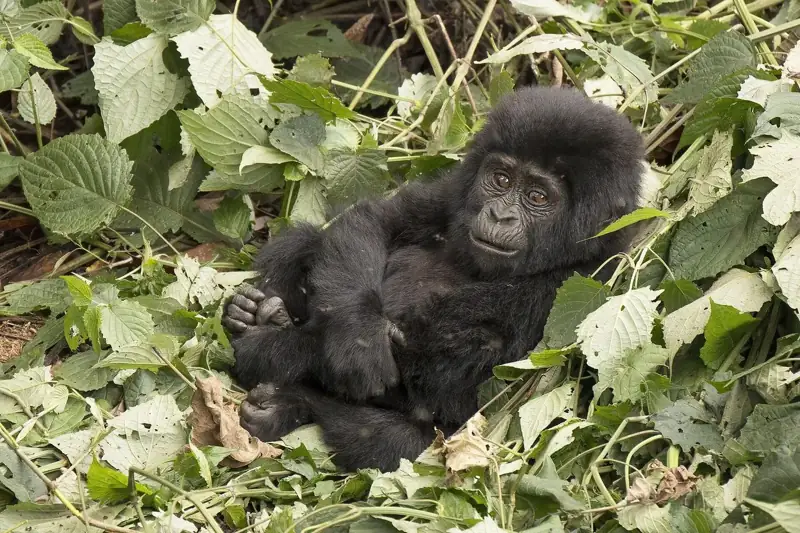
One of the two families still being habituated in the Rushaga area. Visitors join the trackers and research team for up to four hours with the family.
Bwindi’s habituated gorilla families live in four sectors around the park, each with its own history and character. Here is who lives where, including the two families used for the Gorilla Habituation Experience.
In short: each gorilla permit is for one family in one sector. The Uganda Wildlife Authority assigns your family on the morning of your trek, based on where the groups are and on visitor numbers. You can choose the sector, but not usually the exact family.
A gorilla family is led by a dominant silverback, an adult male with a saddle of silver hair across his back, and includes adult females, younger males known as blackbacks, juveniles and infants. Families range in size from a handful of gorillas to more than a dozen, and their structure changes over time as young males leave, females transfer between groups and new families split off.
Only habituated families are visited. Habituation takes two to three years of daily contact by trackers and researchers, after which a family tolerates a small group of visitors for one hour a day. Each habituated family receives at most eight visitors a day, and the two families still being habituated receive at most four.
Because families move and split, names and numbers change. The details below reflect the families commonly visited today, and we confirm current assignments before every trip.
Two families in the south of Bwindi are used for the four-hour habituation experience, starting from the Rushaga park office.
HabituationOne of the two families still being habituated in the Rushaga area. Visitors join the trackers and research team for up to four hours with the family.
 Habituation
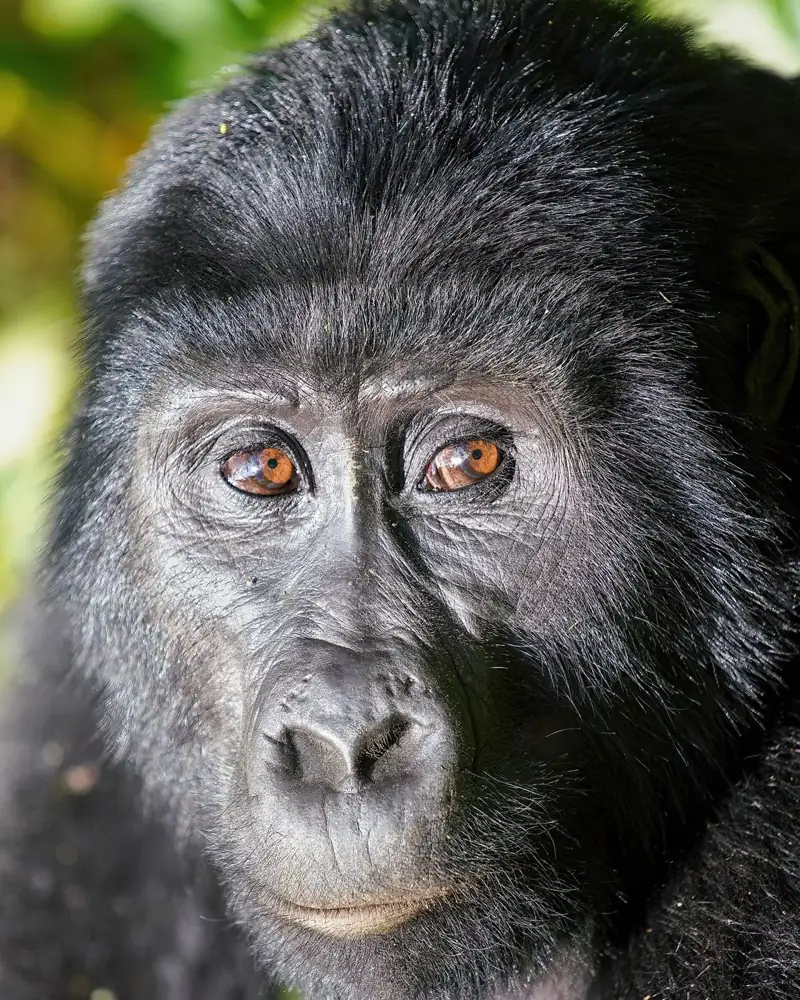
Formed around 2012 when Bahati, a former silverback of the Nkuringo family, began leading his own group. Bushaho is the second family used for the habituation experience.
Commonly visited families. Assignments and status can change.
| Sector | Families for standard trekking | Habituation | Sector guide |
|---|---|---|---|
| Rushaga | Nshongi, Mishaya, Kahungye, Busingye, Bweza and others | Bikingi, Bushaho | Rushaga |
| Buhoma | Mubare, Habinyanja, Rushegura | No | Buhoma |
| Ruhija | Bitukura, Oruzogo, Kyaguriro | No | Ruhija |
| Nkuringo | Nkuringo, Christmas | No | Nkuringo |
| Mgahinga (outside Bwindi) | Nyakagezi | No | Mgahinga |
Rushaga has more habituated families than any other sector, which is why it is so easy to combine habituation with a standard trek here.
Once one of the largest habituated families in Uganda. Several groups, including Mishaya, formed when members split away from Nshongi.
Formed when a silverback left Nshongi with part of the group. Known as a lively family.
A Rushaga family visited on standard treks. It often ranges deeper into the forest, so walks can be longer.
A family that split from Kahungye, visited on standard one-hour treks.
Another Rushaga family that formed from a split, visited on standard treks.
The two habituation families, visited for up to four hours with researchers.
The first family opened to tourists in Uganda, in the early 1990s. Smaller today after years of changes in its membership.
A larger family that often ranges in the valleys near Buhoma.
Formed when part of Habinyanja split away. It often ranges near the park office.
A relatively relaxed family, often recommended for steady walkers.
A family with younger members, which can mean playful sightings.
A family with a long research history in the Ruhija area.
The founding family of the southwest sector, reached by steep trails.
Visited on standard treks from the Nkuringo park office.
The habituated family of Mgahinga Gorilla National Park, on the Virunga volcanoes.
Mountain gorillas spend most of the day feeding on leaves, stems, shoots and fruit, moving slowly through the forest as they eat. Around midday the family rests, and this is often when you see grooming, infants playing and the silverback lying back while juveniles climb on him.
Every evening each gorilla builds a fresh nest of bent vegetation on the ground or in low branches. Trackers find the family each morning by starting at the previous night’s nests and following the trail of broken stems and droppings, which is exactly what you join on a habituation day.
The silverback decides when and where the group moves and protects it from other males. If a younger male grows strong enough, he may challenge the silverback or leave to form his own family, which is how many of Bwindi’s groups came to exist.
You choose the sector when you book the permit. The Uganda Wildlife Authority assigns the family on the morning of your trek, sometimes taking fitness into account.
Bikingi and Bushaho, visited from the Rushaga park office in the south of Bwindi.
Rushaga, which is also the only sector offering the Gorilla Habituation Experience.
It varies from a few individuals to more than a dozen, and changes over time as gorillas are born, die or move between groups.
At most eight on a standard trek, and at most four on the habituation experience, for one hour or up to four hours respectively.
Tell us your dates and we will check habituation and trekking permits for the families you are interested in.
+256 716 068 279Check Availability