
The short answer: the best time for gorilla habituation in Bwindi is during the dry seasons, June to September and December to February, when trails are firmer and the weather more settled. The rainy months of March to May and October to November are muddier but quieter, greener and easier for permits. The gorillas are just as active all year.
Bwindi’s two dry and two rainy seasons
Bwindi Impenetrable National Park sits close to the equator in Uganda’s southwest highlands, so there is no real summer or winter. Instead the year divides into two dry seasons and two rainy seasons. Because Bwindi is a montane rainforest, rain is possible in any month, even in the dry seasons. The difference is how often it rains and how slippery the slopes become.
For the Gorilla Habituation Experience that difference matters more than for a standard trek. You follow the trackers off-trail for much of the day and can be in the forest for six to eight hours, so firm ground and dry spells make a long day noticeably easier.
Bwindi month by month
| Months | Season | Trails | Permits | Good to know |
|---|---|---|---|---|
| December–February | Dry | Firmer | Book early | Popular over the holidays; warm, settled days |
| March–May | Long rains | Muddy, slippery | Easier to find | Wettest period, lush forest, fewer visitors |
| June–September | Dry | Firmest | Sell out first | Peak season; best overall conditions |
| October–November | Short rains | Muddy at times | Easier to find | Showers often in the afternoon; green and quiet |
The dry seasons: June to September and December to February
These are the most popular months for gorilla trips, and for good reason. Trails dry out between showers, river crossings are lower and the long habituation day is less tiring. Photographers also benefit from more stable light under the canopy and fewer days of heavy cloud.
The catch is demand. With only eight habituation places a day in Uganda, permits for June to September and the Christmas period often sell out six to twelve months ahead, and the best-located lodges in Rushaga fill early too. If you want these months, start planning as soon as you know your travel window.
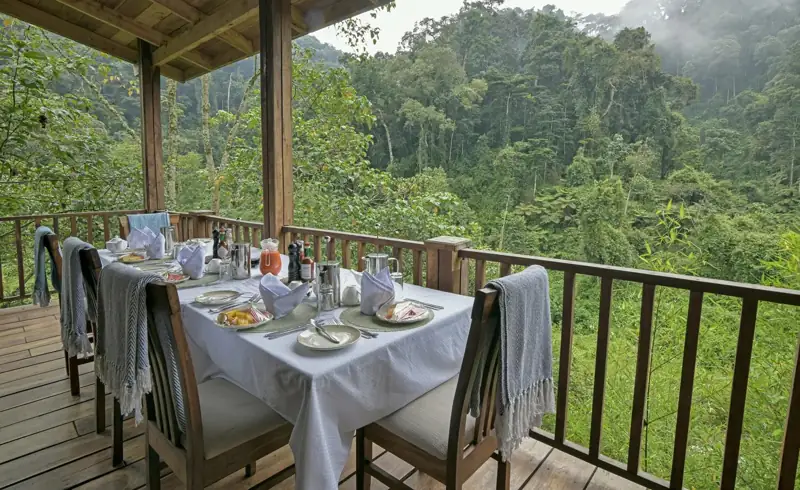
The rainy seasons: March to May and October to November
Rain in Bwindi usually comes as heavy showers, often in the afternoon, rather than all-day downpours. Mornings, when gorilla treks start, are frequently dry. The forest is at its most lush, waterfalls run strongly and birdlife is busy.
The trade-off is mud. Steep slopes become slippery and a habituation day can be harder work. With good boots, gaiters, gloves, a porter and a walking stick, most reasonably fit visitors manage well. In return you get easier permit availability, quieter lodges and, in some years, low-season offers. The Uganda Wildlife Authority has run reduced permit rates for selected rainy months; we confirm what applies when we book.
Weather and temperature in Bwindi
Rushaga lies at high altitude, with forest ridges climbing well above 2,000 metres, so it is cooler than most visitors expect. Daytime temperatures are typically mild to warm, and nights are cool. At Four Gorillas Lodge, close to the Rushaga trailhead, evenings commonly sit around 12 to 18 °C.
Whatever the month, pack layers: a warm fleece for the early briefing, a light rain jacket and breathable long sleeves for the walk. See our full habituation packing list.
Permits and booking by season
- Peak months: book habituation permits six to twelve months ahead for June to September and late December.
- Shoulder and rainy months: three months is often enough, and sometimes a few weeks.
- Payment: permits must be paid in full to be issued, and they are non-refundable, so confirm your dates first.
- Flexibility helps: send us two or three possible dates and we will check each one.
Read more in our gorilla trip cost guide.
Combining Bwindi with other parks
If you are adding a savanna safari, the dry seasons are also the best time for game viewing in Queen Elizabeth National Park, when animals gather near water and grass is shorter. Chimpanzee trekking in Kibale Forest runs all year, with drier trails in the same months as Bwindi.
For a rainy-season trip, plan a slower pace, with a rest day after your trek and a night at Lake Bunyonyi to dry out.
Best time to visit Bwindi FAQs
What is the best month for gorilla trekking in Uganda?
June, July, August and September are generally the best months, with December to February a close second. These are the driest periods with the firmest trails.
Can you see gorillas in the rainy season?
Yes. Gorilla habituation and trekking run every day of the year, and the gorillas are just as active in the rain. Trails are muddier, but permits are easier to find.
When is the cheapest time to see gorillas?
The rainy months of March to May and October to November, when some lodges reduce rates and low-season permit offers have been available in some years.
How cold is Bwindi?
Days are mild and nights cool because of the altitude. Bring a warm layer for early mornings and evenings.
How far ahead should I book for peak season?
Six to twelve months ahead for habituation permits in June to September and over Christmas.

Gorilla Safari Experience team
Our Uganda-based team plans gorilla habituation safaris in Rushaga all year round. About us