The standard mountain gorilla encounter: a guided trek to a fully habituated family, anywhere across Bwindi’s four sectors, for a focused one-hour visit. Here’s everything it involves.
Gorilla trekking is the standard way almost every visitor encounters mountain gorillas in the wild: a guided walk through Bwindi Impenetrable National Park (or, across the border, the Virunga Massif spanning Rwanda and DR Congo) to find one specific habituated family, followed by a strictly timed one hour of observation once the family is located.
Unlike our Gorilla Habituation Experience, which puts you alongside a family still being acclimatized to people in a single sector, standard trekking gives you access to any of the 20-plus fully habituated families spread across Bwindi’s four sectors — Rushaga, Buhoma, Ruhija and Nkuringo — plus Rwanda’s Volcanoes National Park and DR Congo’s Virunga National Park if you choose to trek outside Uganda. It’s the option most first-time visitors book, and for good reason: it’s shorter, more available, less physically demanding as a total day, and meaningfully cheaper.
The one-hour clock starts the moment your guide confirms you’ve reached the family, not from when you leave the trailhead. Everything before that — the walk in, which can run anywhere from 30 minutes to several hours depending on where the family is ranging that day — doesn’t count against your hour with the gorillas.
Arrive at your sector’s park headquarters for registration, a briefing on forest etiquette, and family assignment — groups of up to 8 guests per family.
Guided by park rangers and armed escorts (a standard precaution, not a sign of danger), following trackers already in radio contact with an advance team that located the family earlier that morning.
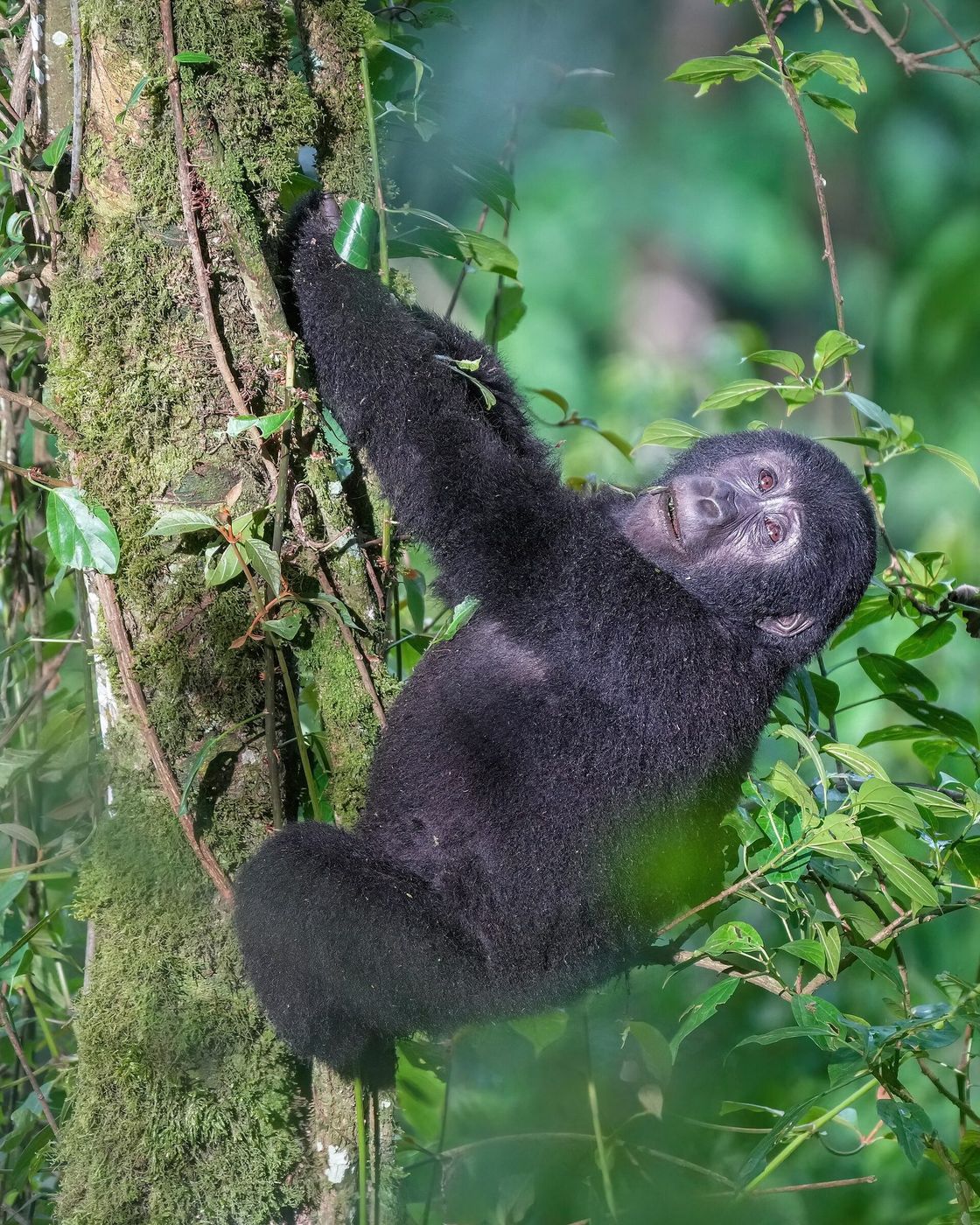
Once located, you get a strict, ranger-timed hour with the gorillas — observing, photographing, and watching family dynamics play out at a respectful distance.
The walk back out, followed by a trekking certificate at park headquarters, typically wrapping up by early-to-mid afternoon.
All four Bwindi sectors offer standard trekking. The right one depends on terrain preference, lodge budget, and which family you’d like to see.
The original, most accessible sector, with the gentlest terrain and the widest choice of lodges. See our Buhoma Sector guide.
The highest-altitude sector, known for cooler weather and strong birding alongside gorilla trekking. See our Ruhija Sector guide.
The largest number of habituated families in one sector, and the only place offering the Habituation Experience. See our Rushaga Sector guide.
The most physically demanding sector, with dramatic ridge views and fewer crowds. See our Nkuringo Sector guide.
Standard trekking permits are considerably more available than habituation permits — over 20 habituated families across Bwindi’s four sectors, each taking up to 8 guests daily, versus just 8 habituation spots Uganda-wide. That said, peak season (June–September, December–February) still sells out weeks to months ahead. See our full trip cost guide for everything beyond the permit itself, and our Uganda vs. Rwanda vs. Congo comparison if you’re weighing trekking outside Uganda.
Trekking buys a strict one-hour visit to a fully habituated family, in a group of up to 8, guided by rangers only. Our Habituation Experience buys up to four hours with a family still being acclimatized to people, in a group of up to 4, alongside the actual research team, and is only available in Rushaga.
Buhoma is generally the gentlest introduction, with the shortest average walk to park headquarters and the widest lodge choice, though any sector can produce a short or long trek depending on where the family is that day.
Most first-time guests say yes — it’s an intense, focused hour, and many describe it as feeling both instant and complete. Guests wanting more time are the ones who typically graduate to the Habituation Experience on a return visit.
You can request a preference, and we pass it on, but final assignment is made by the Uganda Wildlife Authority each morning based on ranger recommendations and recent family locations. See our gorilla family profiles to understand what’s realistically available in each sector.
Yes — our Double Family Experience package pairs a habituation day with a separate standard trek to a different family, and multiple standard treks on consecutive days are also possible with separate permits.